My dog is between two sizes — which do I choose?
You've got a dog between two sizes and the tape measure won't settle it. We get it: it's the question we get most. The short answer is almost always the same —size up— but there are nuances worth knowing so you don't get it wrong. In this guide we give you the golden rule, the real exceptions and the tricks by body type so you nail it first time. Because a well-chosen size means comfort for your dog and zero post-office trips for you.
The golden rule: when in doubt, size up
If you're between two, pick the bigger one. It's the advice we give 90% of the time, and for good reasons:
- A loose garment is comfortable. A tight one isn't. Extra room adjusts or goes unnoticed; tightness rubs, limits and stresses.
- Wellbeing rules over looks. Better a couple of centimetres of margin than a dog that can't move its legs properly.
- Room for coat and movement. Dense-coated breeds or very active dogs appreciate that extra space.
A garment that's too small crushes the chest, shortens the stride and rubs the armpits. That's not an aesthetic problem: it's a mobility problem. So, when in doubt, go up.
Which size to pick if my dog is between two: the 30-second method
To know which size to pick if your dog is between two, don't improvise. Follow this order.
1. Prioritise chest girth
The chest rules. It's the measurement that decides whether the garment fits or not.
- If the chest falls in the bigger size, take the bigger one even if the length is a bit long.
- Back length is easier to tolerate when generous than a tight chest.
2. Check the back length
Once the chest fits, look at the back.
- Would the garment cover the peeing area? Then the bigger size's length is excessive: consider the smaller one.
- In general, a couple of extra centimetres on the back don't bother.
3. Cross-check with each garment's guide
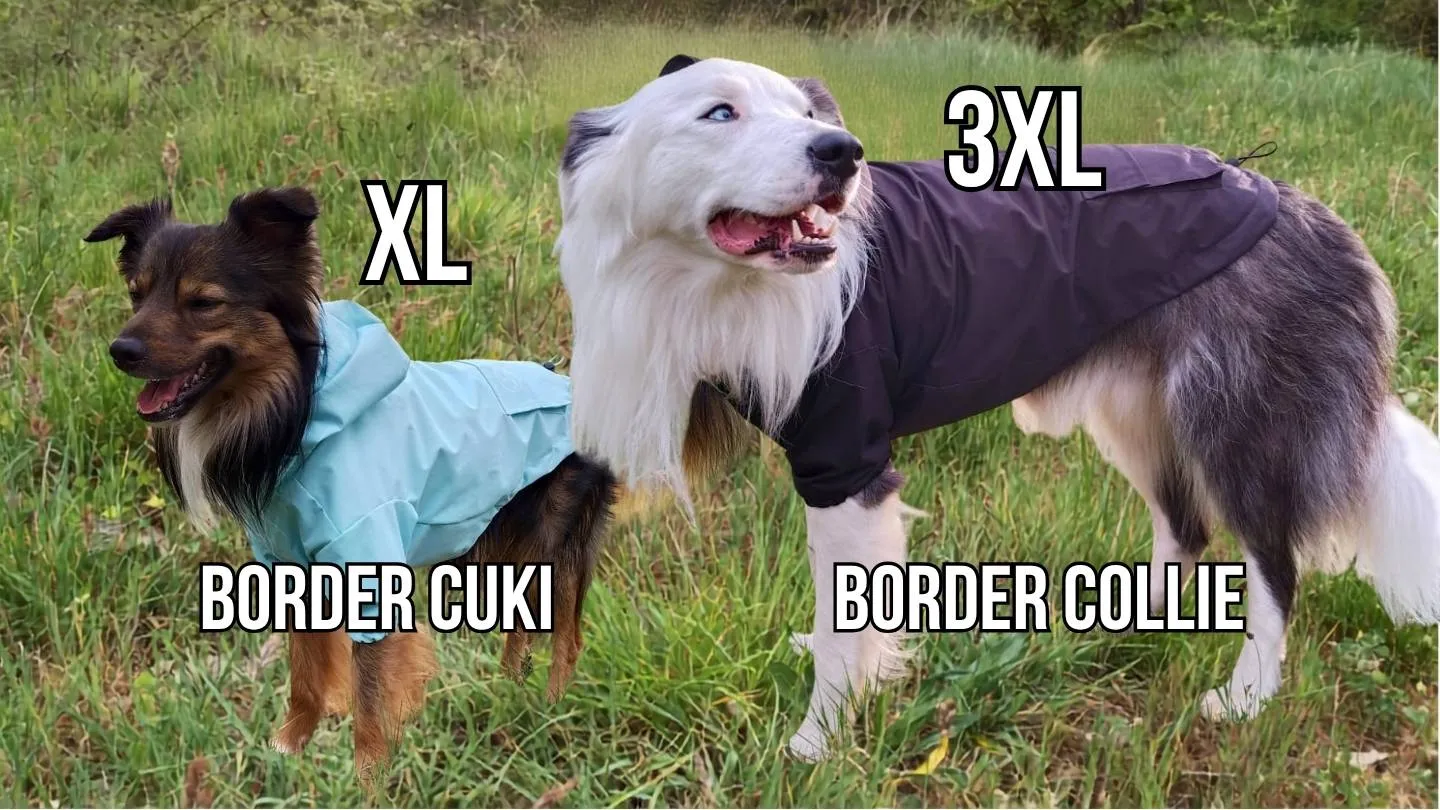
Not every garment sizes the same. Before deciding, check your measurements against our size guide: there you'll see each model's exact chest girth and back length. Real example: a border collie is the classic doubt case, because at 9-14 kg it's already XL, at 14-20 kg it moves to 2XL and from 20 kg it's 3XL. If your dog is right on a weight jump, measure the chest and, when in doubt, go up. Not sure how to measure? We explain it in How to measure your dog.
The exceptions: when the smaller size IS better
You don't always go up. There are cases where the smaller size wins:
- Puppies that are nearly done growing and the bigger size's length drags on the floor. If it's still growing, see what size to pick for a puppy.
- Garments with a snug fit by design (technical shirts, fitted capes) where loose loses its point and function.
- Very long breeds (dachshund): if sizing up blows out the girth but you don't need more chest, stay on the smaller one and prioritise length.
- Dogs between one size's chest and another's length: the chest rules. If the chest is the smaller one, take the smaller one even if the length falls a bit short, better than compressing the chest.
The key: the chest must never be tight. Everything else is negotiable.
Fit changes with body type
The same doubt is solved differently depending on your dog:
- Deep chest (greyhound, podenco, dobermann): don't trust the lean silhouette. The chest is wider than it looks, so prioritise chest girth over weight.
- Compact and muscular (bulldog, pug): watch the neck. If the bigger size gives you chest room but the neck doesn't choke, go for it.
- Long (dachshund, basset): decide by back length, not weight.
- Dense coat (husky, samoyed): add margin. That coat takes up space, and the garment shouldn't flatten it.
Conclusion: up when in doubt, chest as referee
If your dog is between two sizes, the answer is simple: size up unless the length becomes a nuisance or the garment is a snug fit by design. And remember the ultimate referee: chest girth must never be tight. With that, you'll get it right almost every time and give your dog full freedom of movement.
Ready to decide? Take your measurements, open our size guide and compare them with the model you like. Comfort first, attitude second.
If you want the full chart by breed and weight, head to the dog size guide; and to avoid the classic slip-ups, check the mistakes when buying dog clothes.
Frequently asked questions
My dog is between two sizes — do I always go up?
Almost always, yes. The exception is when the bigger size's length covers the peeing area or when the garment is a snug fit by design. In those cases consider the smaller one, but never with a tight chest.
What rules if the chest is one size and the length another?
The chest rules. It's the measurement that decides whether the garment fits and whether the dog moves comfortably. Length is more tolerable when generous than a tight chest.
Does my dog's coat affect choosing between two sizes?
Yes. Dense or long-coated breeds take up more volume, so it's worth sizing up to avoid flattening the coat and keep comfort.
Will one size up look ridiculous?
Not if you choose well. A couple of centimetres of margin go unnoticed and gain comfort. What does show —badly— is a garment that's tight on the chest or shortens the stride.