How to measure your dog to get the size right
Knowing how to measure your dog is the difference between a garment that fits like a glove and one that ends up at the back of the drawer. This isn't about fashion: the wrong size limits movement, rubs the armpits or slips off the back. At FARA 961 we see this every day. The good news: with two measurements and a tape measure you solve it. In this guide you'll learn to measure your dog quickly, reliably and repeatably, so the next hoodie or raincoat fits perfectly first time.
Why size matters more than design
A dog isn't a coat hanger. Comfort comes first. A garment that's too tight crushes the chest and shortens the stride. One that's too loose twists, snags and gets in the way when walking.
A correct fit does three things:
- Full mobility: front legs free, no pulling at the armpits.
- No pressure on the chest: the dog breathes and moves naturally.
- Right coverage: the garment reaches the back without covering the genitals or the peeing area.
If just one of these fails, the size is wrong. That's why we measure before buying.
How to measure a dog for clothing: the 2 key measurements
Here's the core. To get almost any garment right you only need two figures. Knowing how to measure a dog for clothing comes down to this.
1. Chest girth (the key measurement)
It's the most important. It decides whether the garment fits or not.
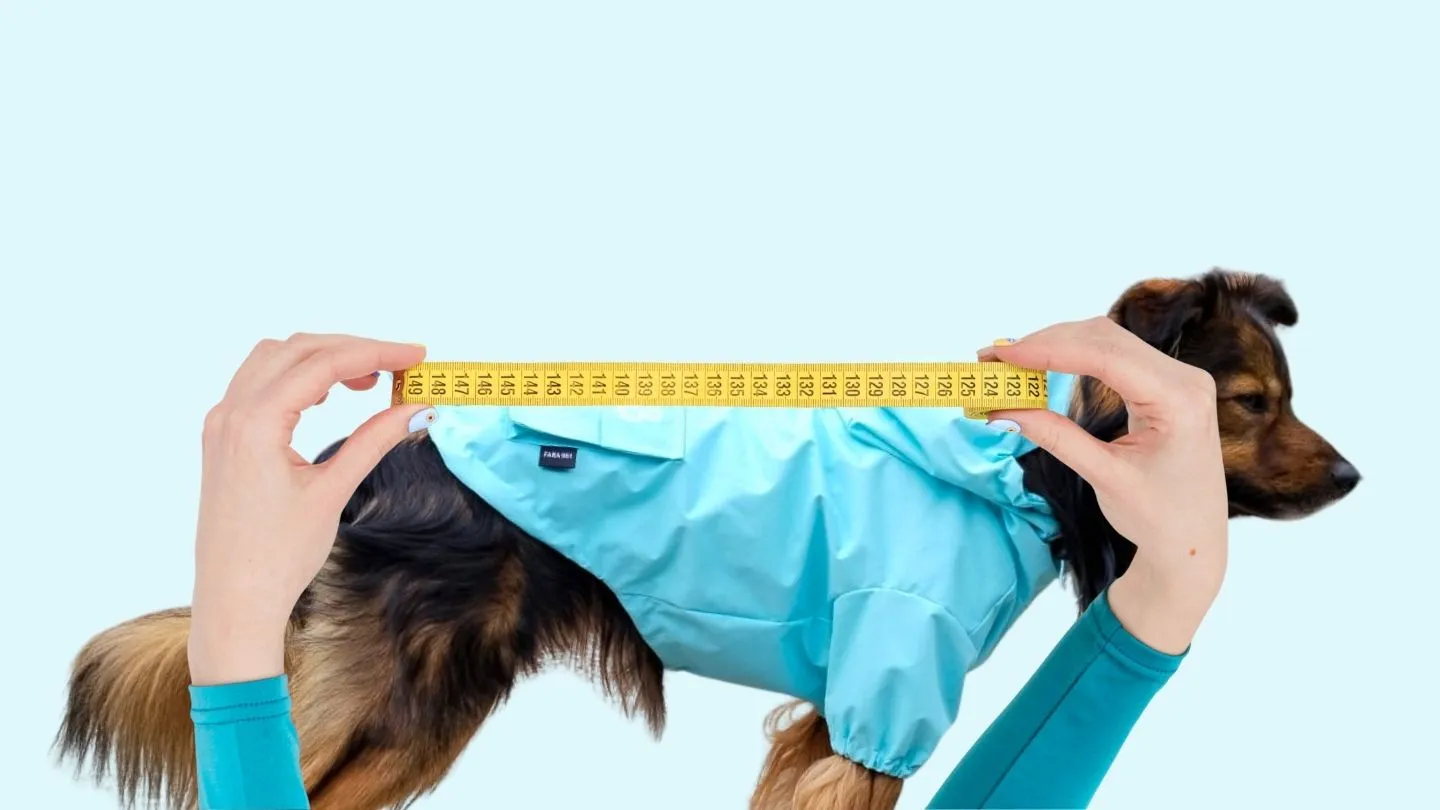
- Find the widest part of the chest, just behind the front legs.
- Wrap the tape around the chest, passing it behind the armpits.
- The tape should be snug but not tight: one finger fits between the tape and the coat.
This measurement rules over the rest. If the chest doesn't fit, it doesn't matter how well the length works.
2. Back length
It defines how far the garment reaches.
- Measure from the base of the neck (where the collar would sit) to the base of the tail.
- The dog must be standing, in a natural position, not sitting or stretched out.
- Don't include the tail in the measurement.
Extra measurements (optional, but useful)
- Neck girth: for closed-neck garments or hoodies. The same as you'd measure for a collar.
- Weight: many charts use it as a cross-reference. It doesn't replace the measurements, but it helps confirm.
Common measuring mistakes (and how to avoid them)
Most returns come from avoidable mistakes. These are the most common:
- Measuring with the dog sitting. It changes the back length completely. Always standing.
- Pulling the tape tight. It skews the girth and you buy a size too small. Leave one finger of slack.
- Measuring over clothing or a harness. Measure on the bare body.
- Relying on weight alone. Two 20 kg dogs can take different sizes. A 20 kg border collie is 3XL, but a 20 kg beagle is 2XL: shape rules over kilos.
- Rounding down. If you're between two sizes, go up. It's easier to take in extra room than to suffer with too little.
Trick for dogs that won't keep still
Measure after a walk or playtime, when they're more relaxed. Reward with a treat while you run the tape. And if they move, repeat the measurement two or three times and take the average.
Fit changes with body type
Not every dog fits a generic chart. Body shape matters as much as size:
- Deep-chested breeds (greyhounds, podencos, dobermann): they need more girth than their slim build suggests. Don't trust the lean silhouette: measure the chest, which is wider than it looks.
- Compact and brachycephalic breeds (French bulldog, pug, English bulldog): wide chest and neck relative to length. A French bulldog jumps from M to XL depending on the dog. Make sure the neck isn't tight.
- Long breeds (dachshund, basset hound): back length rules. A short garment leaves half the back exposed.
- Puppies: they grow fast. If in doubt, don't buy too far ahead. Specific guide: how to measure a puppy.
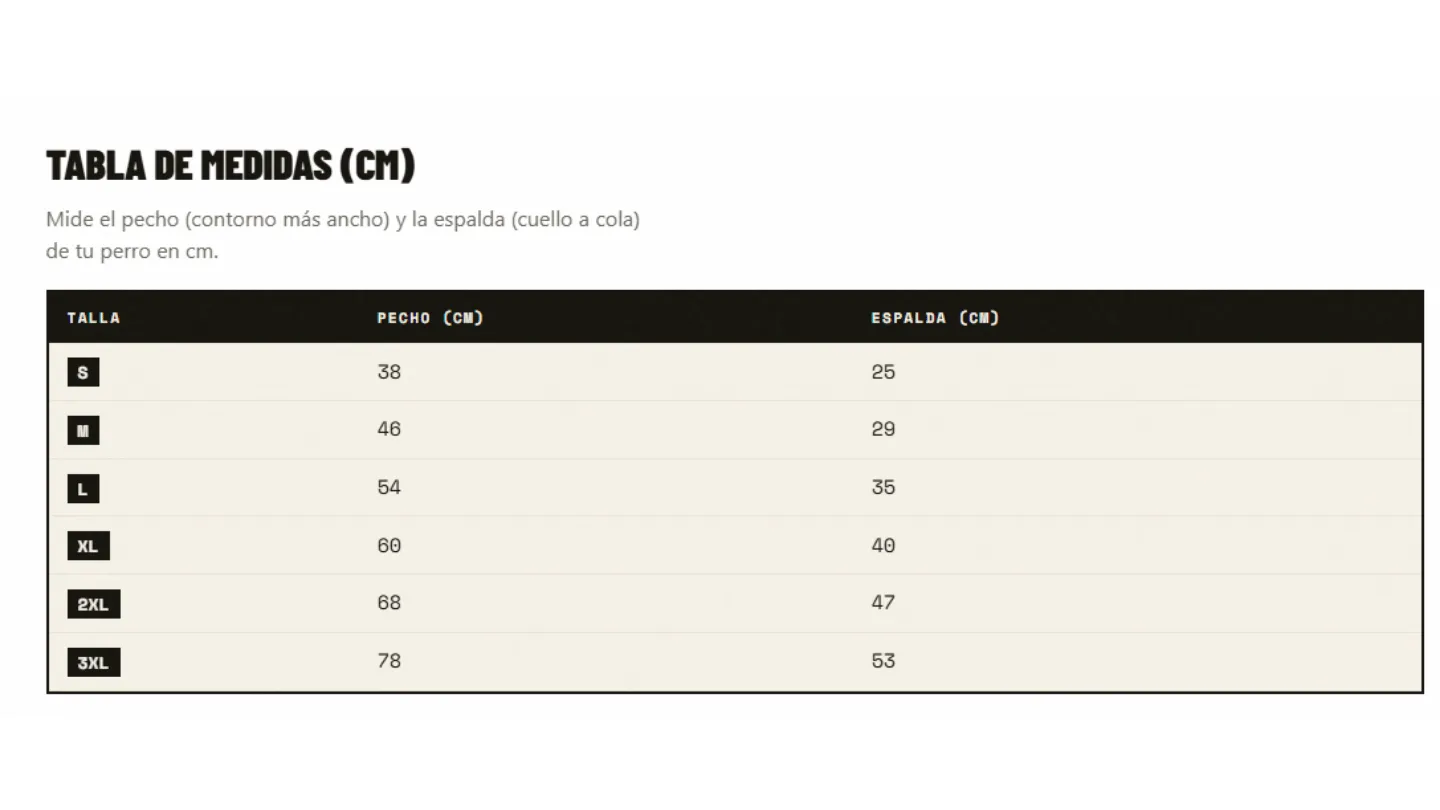
That's why at FARA we build every size with its exact chest and back reference. Before buying, check your measurements against our size guide: there you cross chest girth and back length with the right size. Real example: a beagle of around 10 kg usually fits size L on our by-breed guide, but past 11 kg it jumps to XL. So it pays to measure and not just trust the scales.
Conclusion: two measurements, zero returns
Getting the size right is no mystery. Grab a tape measure, measure the chest girth and back length with the dog standing and relaxed, leave a finger of slack and, when in doubt, size up. That cuts returns to almost zero and, above all, gives your dog a garment that lets it move freely.
Now you know how to measure your dog. Is your dog right between two sizes? We solve it in My dog is between two sizes — which do I choose?. And to pick the exact size of each garment, use our size guide.
Want the full reference by breed and weight? It's in the dog size guide. And before buying, review which measurements to note down.
Frequently asked questions
Can I go by my dog's weight alone?
No. Weight works as a cross-reference, but two dogs of the same weight can have opposite body types. A 20 kg border collie and beagle don't take the same size (3XL and 2XL respectively). Always measure chest girth and back length.
Which size do I pick if my dog is between two?
Always size up. A slightly loose garment is comfortable; a tight one rubs and limits movement.
How do I measure a dog that won't keep still?
Measure them relaxed, after a walk, and reward with a treat while you run the tape. Repeat two or three times and take the average.
Do I measure over the coat or over the harness?
On the bare body. Measuring over a harness or another garment skews the girth and leads to the wrong size.