Is my dog cold? How to tell

"Is my dog cold?" is one of the questions we get most as soon as temperatures drop, and the answer isn't always obvious. Dogs don't tell us they're cold, but they show it with their body: shivering, a hunched posture, icy ears and paws or wanting to head home early. Learning to read those signs is key to knowing when your dog really needs a coat and when it doesn't. In this guide we teach you to spot it sensibly, without alarmism and without over-layering a dog that doesn't need it.
Not all dogs feel the cold the same
Before interpreting signs, there's one thing to understand: cold doesn't affect all dogs equally. Breed, size, coat, age and health completely change the equation.
Short-haired or undercoat-less breeds (greyhounds, podencos, boxers, pinschers), small breeds with little body fat (chihuahuas, yorkshires), puppies and senior or sick dogs are much more sensitive to cold. At the opposite end are the double-coated arctic breeds, like the husky or malamute, which carry their own built-in technical coat and rarely need clothing. That's why the same winter walk can be torture for a greyhound and a pleasant stroll for a husky. Knowing your dog is the first step to reading correctly what its body tells you. And if yours is a chihuahua, the cold-sensitive breed par excellence, we have a guide to keeping your chihuahua warm.
How to tell if my dog is cold: the key signs
If you're wondering how to tell if my dog is cold, the answer is in observing it. These are the most reliable signs, from the most obvious to the most subtle.
The first and clearest is shivering: just like us, the dog shivers to generate heat. If it shivers outside without extreme cold, it's warning you. Add to that body posture: a cold dog hunches its body, tucks its tail between its legs, lowers its ears and walks tense, as if trying to take up the least space possible.
There are physical signs you can check by touch. Cold ears and paws are a good indicator, because they're the areas where heat loss shows first. It's also common for a cold dog to actively seek warmth: it clings to you, curls up, looks for blankets or sheltered corners. And on the walk, a very telling sign is wanting to head home early, resisting going forward or standing stiff at the door before leaving. Finally, watch for a gesture that's easy to miss: lifting its paws off the ground alternately, because contact with the icy ground bothers it.
The 3-sign test
After so many questions on this topic, we like to sum it up in a quick trick anyone can apply on getting back from the walk. Check three things: whether it shivers, whether it's hunched and tense, and whether its ears or paws are cold to the touch. If two of the three are met, your dog is very likely cold and would appreciate a coat on the next outings. It's a home method, not a diagnosis, but it works surprisingly well day to day.
When cold is a warning sign
Most of the time, cold is a simple discomfort solved with a coat. But it's worth knowing when it becomes worrying. If the shivering is intense and won't stop, if the dog is apathetic, very weak or disoriented, or if after a while in the cold it doesn't react normally, you must act: take it somewhere warm, dry it if it's wet and consult the vet. Hypothermia is rare on normal walks, but it's real with prolonged cold exposure, especially in sensitive breeds, puppies and senior dogs. Faced with any severe sign, health comes first and the decision is always the professional's: this article helps you spot everyday cold, not replace veterinary judgement.
What to do if your dog is cold
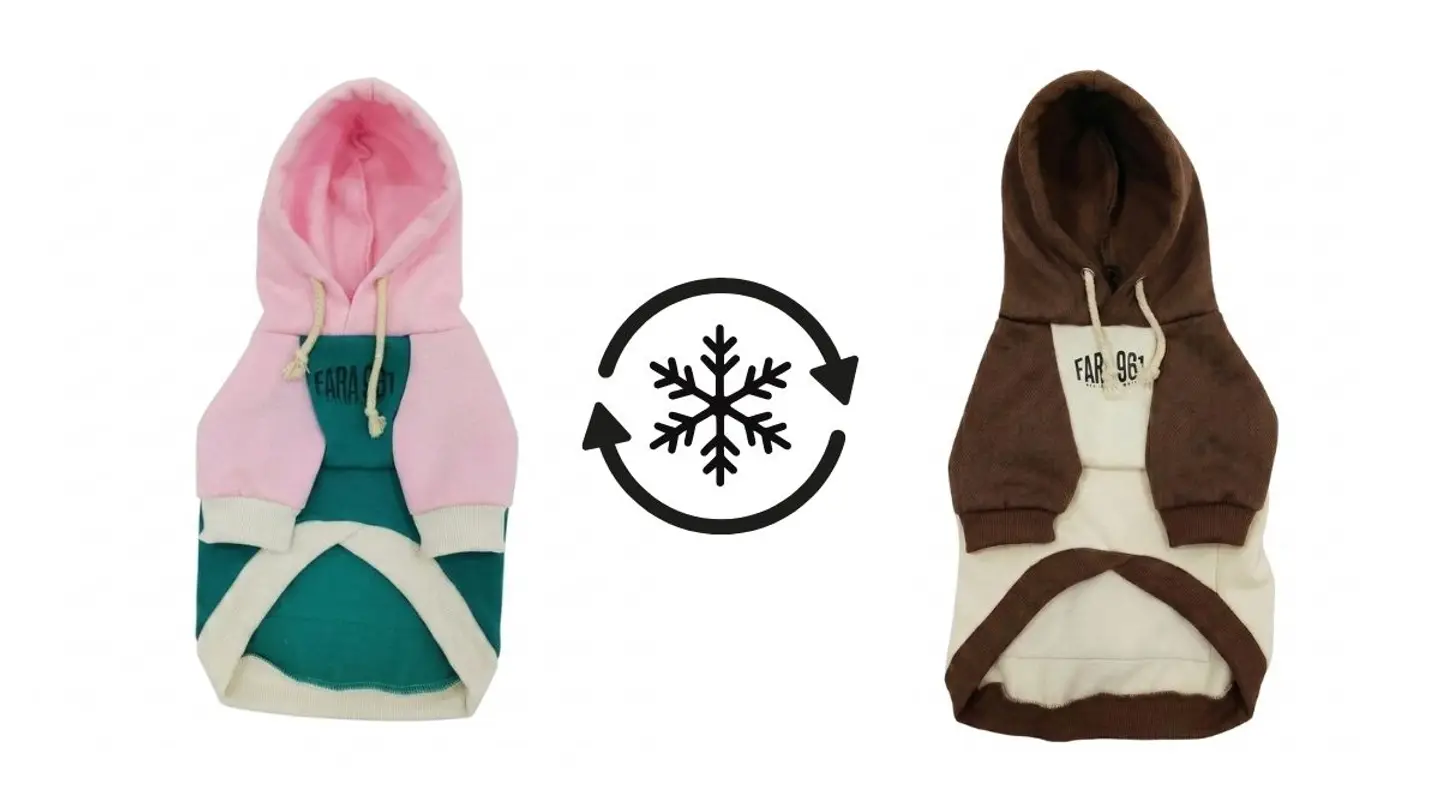
When the signs are clear but mild —the classic shiver and hunched posture on the walk—, the solution is simple and direct: keep it warm. A good sweatshirt keeps body heat in the chest and back, which is where it's needed most, and lets it enjoy the walk instead of enduring it. We're not talking about fashion: for a cold-sensitive dog, a well-fitted sweatshirt is pure functional comfort. And if you're worried the hood will bother it, we cover that in are hooded sweatshirts comfortable?: well chosen, it doesn't interfere at all.
One important note: a wet dog feels twice as cold. If yours often gets wet in winter, protection from the rain is as important as warmth, and that's where the raincoat comes in. The key, in any case, is the fit: a garment that squeezes the chest or limits movement doesn't solve the problem, it swaps it for another. So it pays to get the size right in our size guide; for the sweatshirt specifically, see what sweatshirt size your dog needs. And if the garment picks up a wet-dog smell, here's how to get it out of the clothes.
💡 FARA 961 tip: touch your dog's ears and paws when you get back from the walk. If they're cold and it looks hunched, it's a good sign a sweatshirt would help on the next outings.
When it doesn't need a coat (and forcing it is a mistake)
As important as spotting cold is not over-layering. If your dog shows no sign —doesn't shiver, moves loosely, doesn't seek warmth and enjoys the walk—, it probably doesn't need clothing. In double-coated breeds, putting on a thick garment can cause the opposite: overheating and stress. A hot dog pants excessively, seems restless and tries to get the garment off. The rule is the same both ways: the dog's comfort always comes first. We layer up when there's real cold, not out of habit or for looks.
If you want to dig into the underlying debate, we cover it in depth in Do dogs need clothes? Myths and facts.
Conclusion: listen to what its body says
Knowing if my dog is cold isn't about guessing, it's about observing. Shivering, hunched posture, cold ears and paws, wanting to head home: its body gives you all the information you need. When those signs appear and are real, a well-fitted sweatshirt makes the difference between enduring the walk and enjoying it. And when they don't appear, the best thing is to leave it as it is: no cold, no extra clothing.
Is your dog one of the cold-sensitive ones? Take a look at our dog sweatshirts: real warmth, careful fit and urban attitude. And if you head off on a countryside adventure, get it ready in your dog's camping bag. Comfort first, attitude second.
And if rain joins the cold? We explain how to get your dog used to a raincoat without the stress.
📸 Show us your dog well wrapped up on Instagram: @fara961dogwear.
Frequently asked questions
How do I know if my dog is cold?
Watch the signs: shivering, a hunched body, tail between the legs, ears and paws cold to the touch, or wanting to head home early. They're the most reliable indicators that your dog is cold.
At what temperature do dogs get cold?
It depends a lot on breed, size and coat. Small or short-haired breeds may start to feel it below 10 ºC, while arctic breeds handle very low temperatures with no problem. More than the thermometer, watch your dog.
Do all dogs need a sweatshirt in winter?
No. Short-haired, small, senior or sick breeds appreciate it; double-coated ones, like the husky, don't need it and can even overheat in it.
How do I choose the sweatshirt size so it keeps them warm?
Measure your dog's chest girth and back length and compare them with the size guide. A well-fitted sweatshirt retains heat without squeezing; a badly chosen one neither warms nor feels comfortable.