Dog streetwear: the definitive guide to canine fashion

Dog streetwear is no longer a novelty: it's a way to extend your style to your street companion. Hooded sweatshirts, football jerseys customisable with their name and number, technical raincoats with attitude. But dressing your dog with style isn't about a costume: it's about combining design and real comfort. In this definitive guide we explain what canine streetwear is, what types of garments exist, how to build a good look, what to wear by season and the mistakes to avoid. Because at FARA 961, designed in Spain, the dog comes first and the attitude, right after.
What dog streetwear is (and what it isn't)
Streetwear was born in the street: skate, hip-hop, urban culture. Comfortable clothing with identity and a message. Applied to the dog, the concept is the same: garments with urban character, designed to actually be worn, not for one photo and straight to the drawer.
Real canine streetwear is recognised by its urban cuts and clean lines, by the option to personalise (like the name and number on the football jerseys) and, above all, by being designed for the dog's body. What isn't streetwear: costumes that limit movement, uncomfortable garments 'for the aesthetic' or anything that covers sensitive areas or squeezes the chest. The difference is key: good streetwear respects the dog's anatomy; a costume doesn't.
Where it comes from: from asphalt to the park
Human streetwear has been culture for decades: hoodies, team jerseys, technical garments turned style icons. It was only a matter of time before that language reached the dog, the urban companion par excellence.
Today, dressing your dog with urban flair is a form of shared identity: your dog walks with its own attitude, coordinated with yours. And when the garment is well designed, that style doesn't cost a gram of comfort. That's the beauty of good canine streetwear: aesthetics with a brain.
The 4 keys to canine urban style
This dog streetwear fashion guide rests on four pillars, and the first rules them all: the fit.
A poorly fitted urban garment loses all its charm and, worse, bothers the dog. The right fit leaves the front legs free, with no pulling at the armpits, doesn't squeeze the chest or neck and doesn't cover the toilet area. That's why, before buying, it's worth measuring the dog and checking the measurements against our size guide; if you're unsure with the tape, we explain it step by step in How to measure your dog. Getting the size right is 80% of a good look.
The second pillar is materials. Style is worthless if the dog sweats or feels overwhelmed, so we look for breathable fabrics with a bit of stretch for movement and flat seams that don't chafe. The third is personalisation: at FARA 961, the football jerseys are customised with your dog's name and number, with 4 fonts to choose the exact style. It's identity, it's a bond, and it turns a garment into their garment. That's why the football jersey works so well as a gift for another dog-loving owner. And the fourth is style coherence: colours, lines and details that match your dog's personality (and, why not, yours).
Types of streetwear garments (and when to use each)
Not every garment does the same job. This is FARA 961's streetwear catalogue and when each piece makes sense:
- Hooded hoodie. The star piece of canine streetwear: it warms in mid-season, sets the style and the hood gives that urban touch. Available in mocha-cream and pink-turquoise green, it's ideal for cool days and short-haired dogs. Find it in sweatshirts.
- Vintage football jersey with polo collar. Pure attitude, retro style, in black-blue and green-white, customisable with your dog's name and number. To show off without over-warming, on mild days and gentle summers. In jerseys.
- Technical raincoat with front zip. Function and style: snug fit at neck and back so water doesn't get in at the sides, in black and sky blue. Your ally on rainy days and wet fields. In raincoats.
Want to dig deeper? We tell you whether hooded sweatshirts are comfortable, what your dog's football jersey is like and what the trends of the year are.
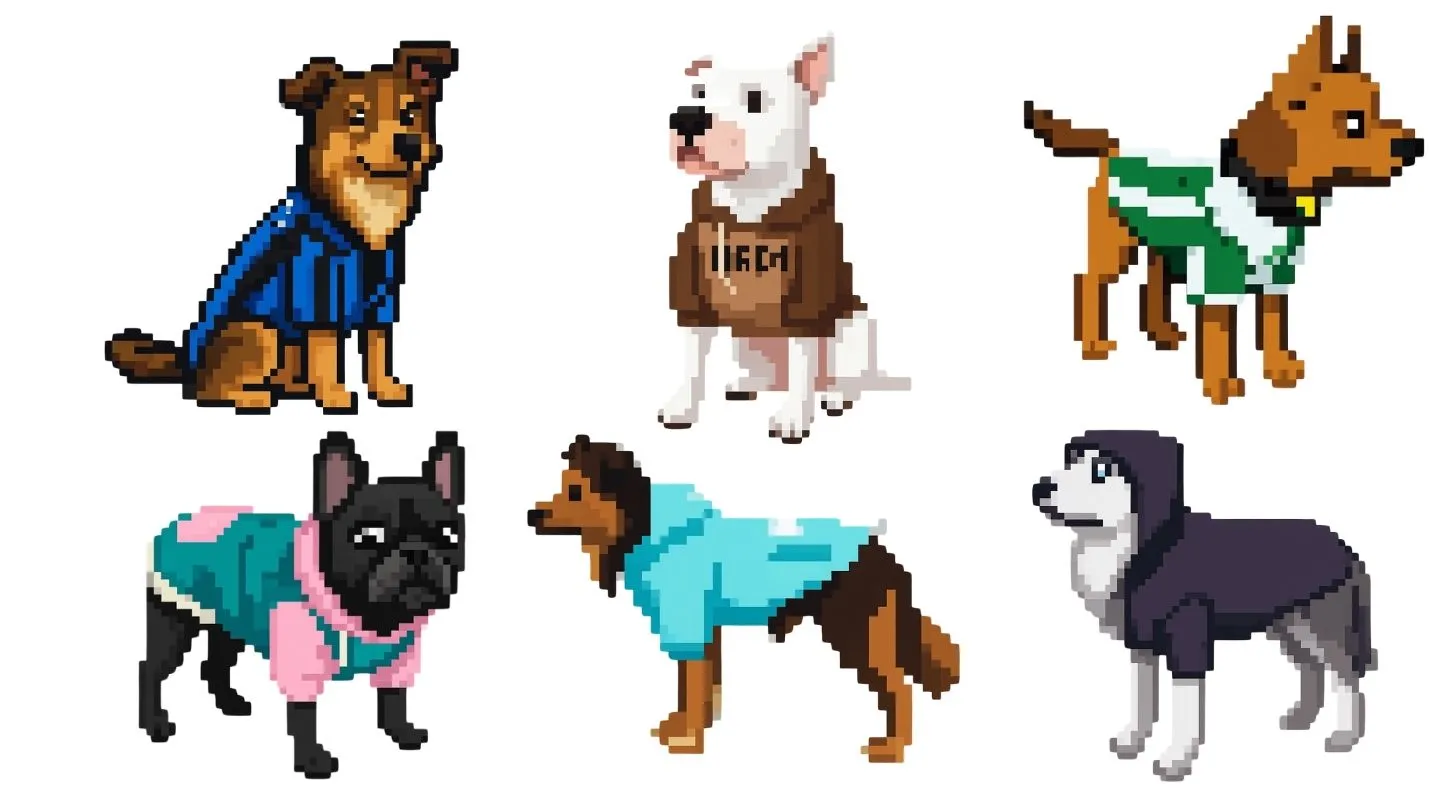
How to build your dog's look
A good look isn't piling on garments, it's choosing well. Best to start with a base piece: the hoodie is the most versatile, because it gives style and warmth at once, though if you live in a mild climate the football jersey is a perfect starting point.
From there, personalise what really matters. The name and number on the football jersey turn a generic garment into theirs, and it's the detail that hooks people most. To combine, the garment doesn't need to match your clothes 100%: it's enough for the palette to make sense. A mocha-cream hoodie goes with almost anything, while pink-turquoise green is for those who want to stand out. The rule is simple: fewer garments, better chosen. A wardrobe of two or three well-chosen pieces covers the whole year.
Streetwear by season
Style also adapts to the calendar. Autumn is the hoodie's prime season, warming through the first cold spells without overdoing it. In winter, the hoodie handles the dry cold and the technical raincoat takes care of rain and damp; for very cold-sensitive dogs, like greyhounds or small breeds, that extra layer is welcome.
Mid-season is the territory of the light hoodie or the football jersey, depending on the day. And in summer, less is more: a light football jersey for style only, with great care about the heat and no warmth at all. Comfort always rules.
Streetwear by size and breed
Size and build change which garment suits each dog best. Small dogs (chihuahua, yorkshire, dachshund, French bulldog) are the kings of streetwear: the hoodie serves the double role of style and real warmth, though watch that it doesn't drag on the floor and that the neck doesn't squeeze on broad-headed breeds. For the chihuahua specifically we cover it in chihuahua clothes, and the french bulldog has its own guide because of its broad chest. And the miniature schnauzer, king of urban style, pulls off clothes like few breeds.
Medium dogs (beagle, border collie, staffy) pull off the full urban cut and handle hoodie, jersey and raincoat well; since they're active dogs, the fit matters even more. With large, dense-coated dogs (German shepherd, husky, golden), on the other hand, beware of overheating: double-coated breeds don't need warmth, so the football jersey for pure style is the best option. Whatever the size, the starting point doesn't change: measure well and confirm the size in the size guide.
Common mistakes when dressing your dog
The most common mistake is choosing by looks before size: a beautiful garment that squeezes the chest is, simply, a bad garment. Fit comes first. The second mistake is warming a dog that doesn't need it: putting a thick hoodie on a husky in autumn is a recipe for overheating.
It's also wise not to ignore back length, because a garment that covers the toilet area becomes a daily problem. And, above all, don't buy without measuring: weight deceives, the tape measure doesn't. Finally, never force a garment if the dog rejects it outright; introduce it slowly and with treats, and if after the adjustment it's still uncomfortable, that garment simply isn't for them.
The golden rule: style YES, discomfort NO
This is what sets us apart: fashion never comes before the dog's wellbeing. Canine streetwear is cool when the dog moves freely, breathes well and is comfortable. If a garment limits it, overheats it or stresses it, it stops being streetwear and becomes a problem.
Learn to read your dog: if it tries to take the garment off or goes stiff, if it pants excessively or overheats, or if it walks strangely and hunches up, the garment isn't working. A dog in good streetwear moves as if wearing nothing. That's the goal.
Why FARA 961: canine streetwear designed in Spain
FARA 961 is born from a simple idea: that your dog can wear your same urban flair, with garments designed for its body. Hooded hoodies, vintage football jerseys customisable with name, number and 4 fonts, and technical raincoats with a careful fit at neck and back. Urban design, real fit and breathable materials. Real streetwear, not costumes. And a perfect plan to show it off: a dog-friendly festival.
Canine streetwear glossary
- Hoodie: a hooded sweatshirt, the base piece of streetwear.
- Number: the customisable digit, like on a team jersey.
- Fit: how the garment sits on the body; a good fit gives freedom of movement without being loose or tight.
- Double coat: the fur of arctic breeds (husky, malamute) that already works as natural warmth.
- Technical raincoat: a garment that repels water while keeping breathability and fit.
Frequently asked questions
Is dog streetwear only aesthetic?
It has a clear aesthetic component, but good streetwear is also functional: hoodies that warm in mid-season, raincoats that protect from rain. The key is that it never compromises the dog's comfort.
How do I get the size of an urban garment right?
Measure your dog's chest girth and back length and compare them with the size guide. Fit is what separates a good look from an uncomfortable garment.
Can I personalise my dog's clothing?
Yes, with our football jerseys. You can add your dog's name and a number, and choose from 4 fonts, like their own team jersey.
Which garment for a rainy day?
The technical raincoat with front zip. Its fit at neck and back stops water getting in at the sides and keeps the dog dry without losing style.
Can any dog wear streetwear?
Almost any, as long as the garment respects its anatomy and doesn't overheat it. Very hairy breeds need light, breathable garments to avoid overheating.
How do I get my dog used to clothes?
Introduce them gradually and link them to something positive: treats, walks, play. Start with short sessions. If the garment fits well, most dogs accept it quickly.
Does the hoodie really work for cold?
Yes, for moderate cold and mid-season, especially in short-haired or small breeds. In extreme cold or rain, layer it or switch to the technical raincoat.